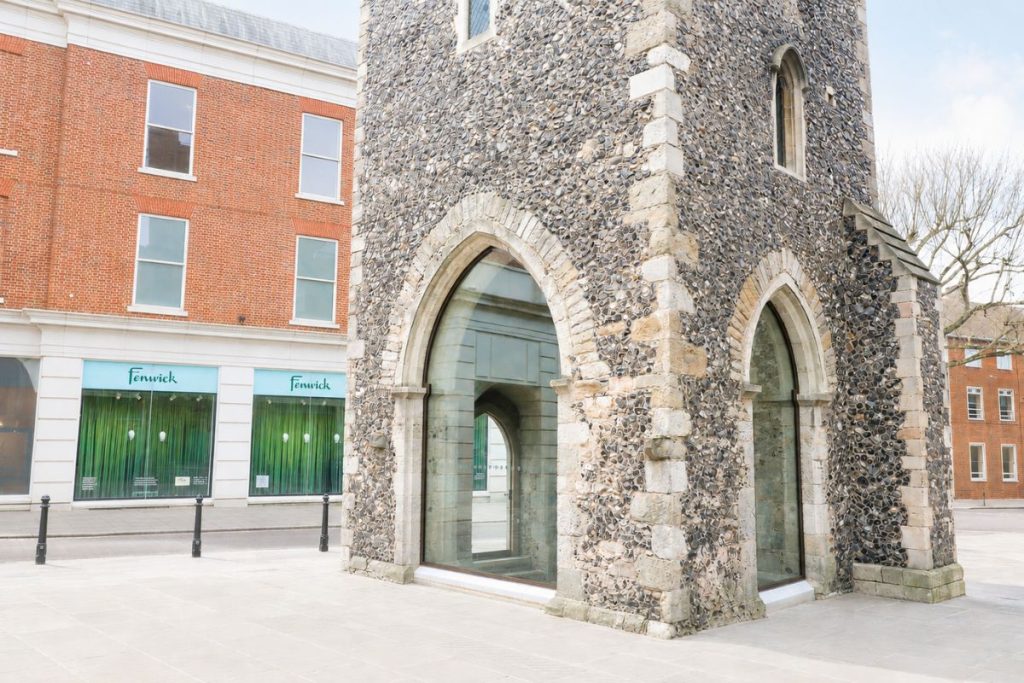
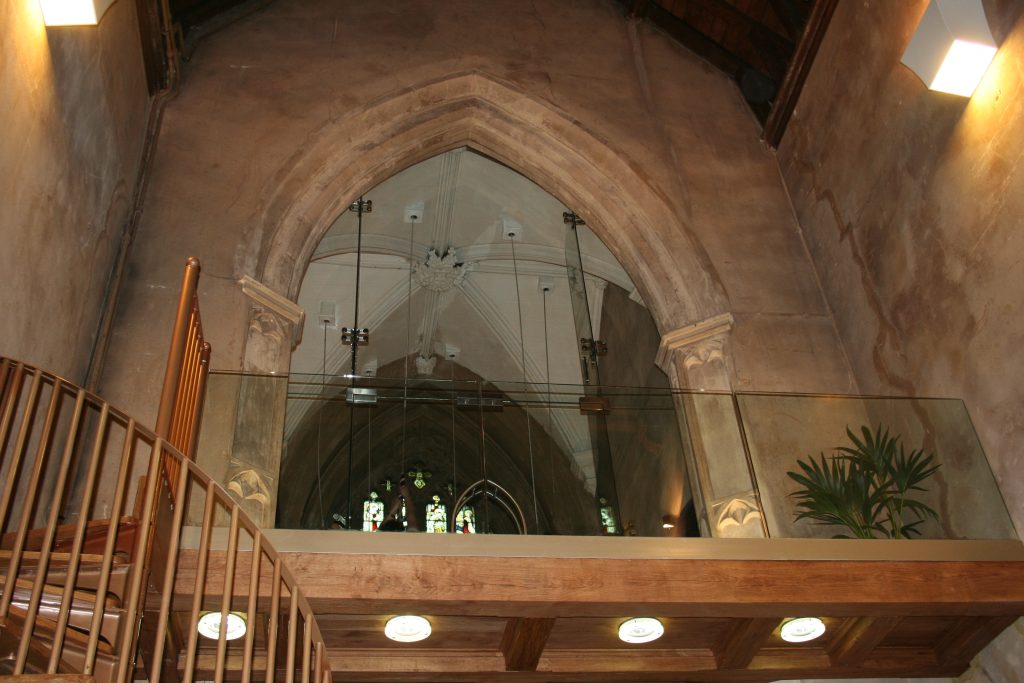
“Initial response to the new glass meeting rooms at St Mary’s at the Quay has been exceptionally positive. Staff working in the newly opened venue commented in particular about how the acoustic glass effectively negated the noise impact of the busy road adjacent to the church whilst still enjoying the natural light through the original arched glass windows.”
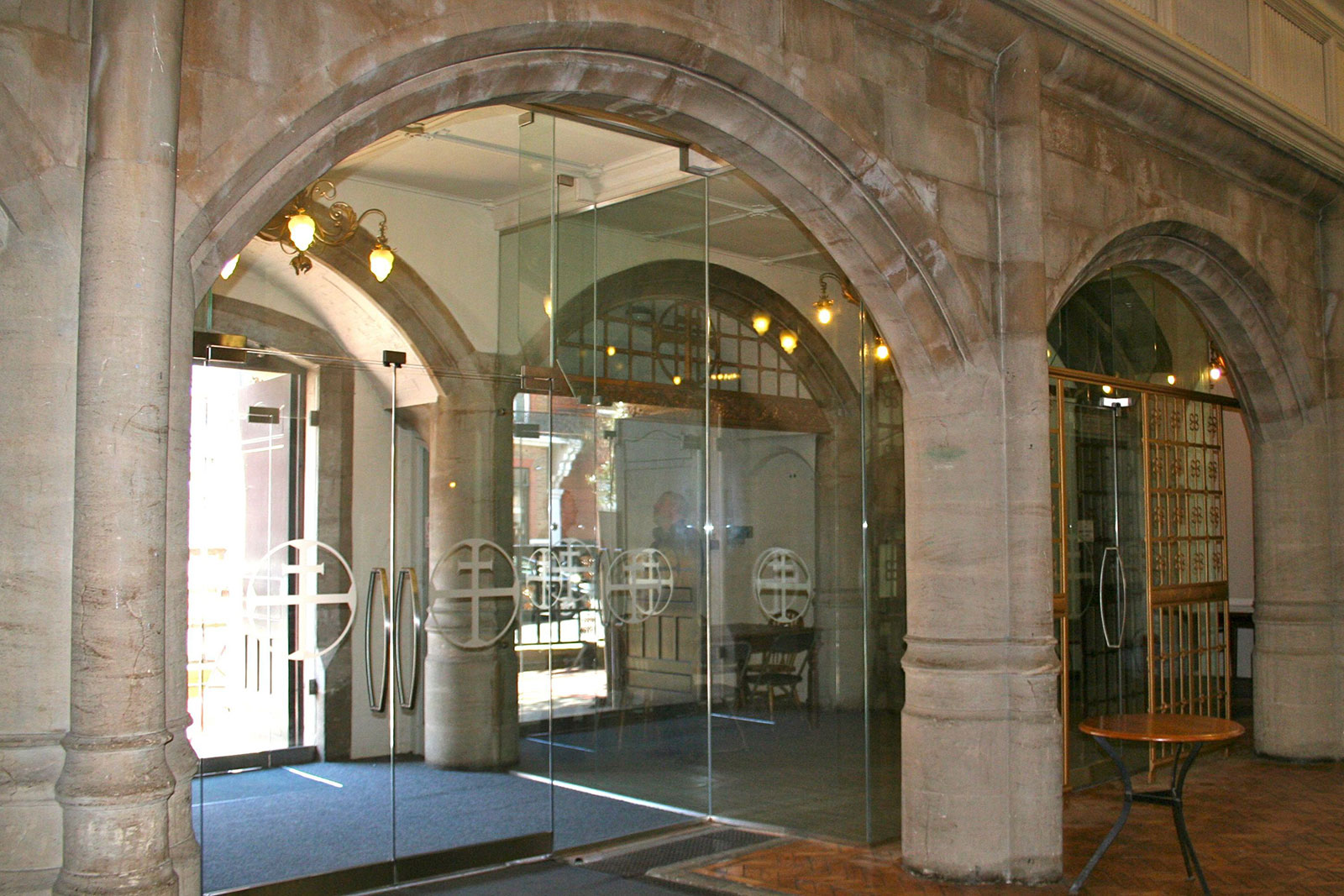
Glass Doors & Meeting rooms for Holy Trinity Church located just off Sloane Square in the heart of fashionable Chelsea.
Overview
Built at the end of the 19th Century Holy Trinity is a testament to the Arts and Crafts Movement, containing treasures by some of the leaders of the movement, including William Morris and Edward Burne-Jones.
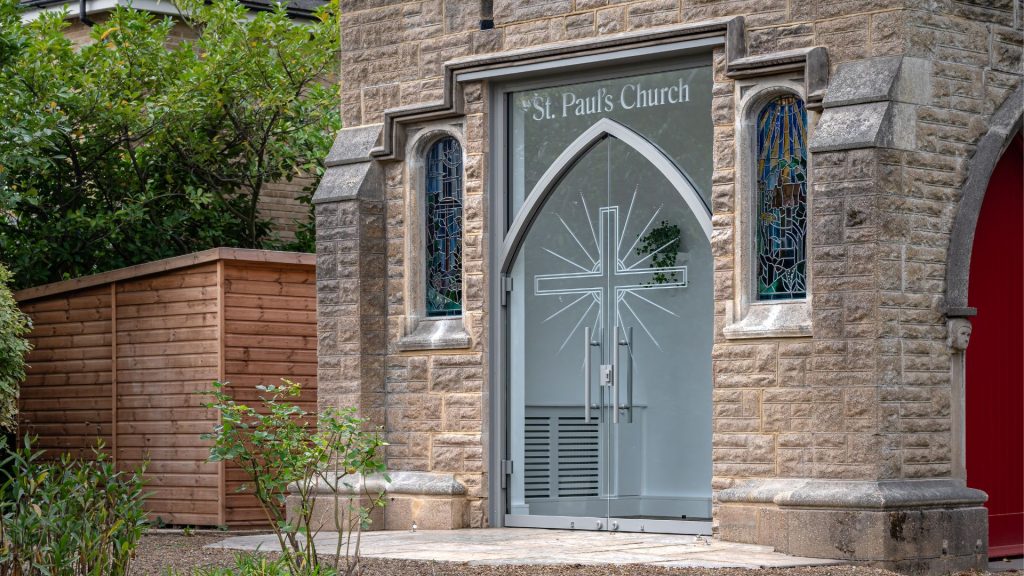
The church commissioned sound-proofed rooms to enable private meetings and to provide space for children during the Sunday service combined with new entrance doors to retain heat, exclude draughts and to provide an acoustic barrier against external traffic noise.
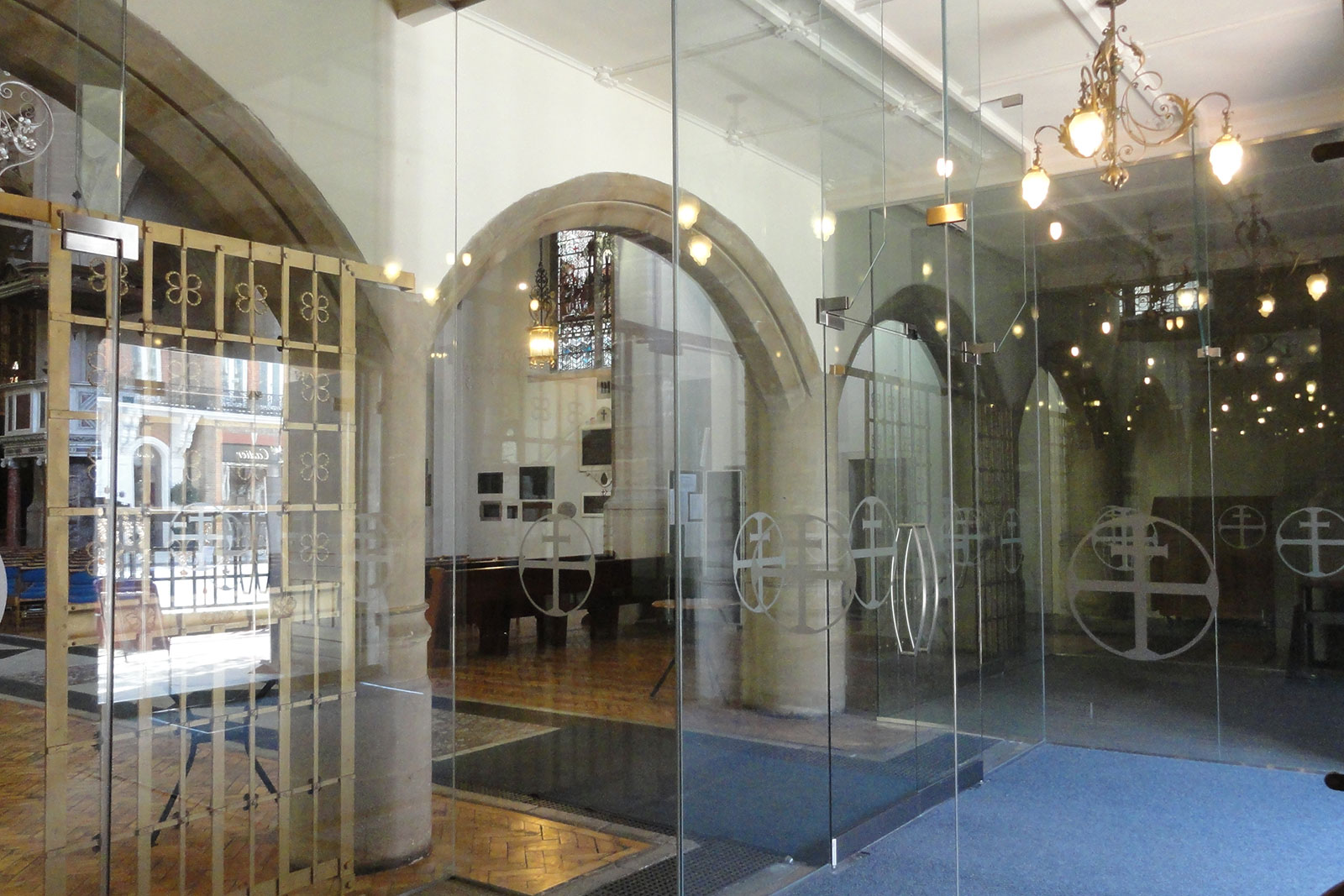
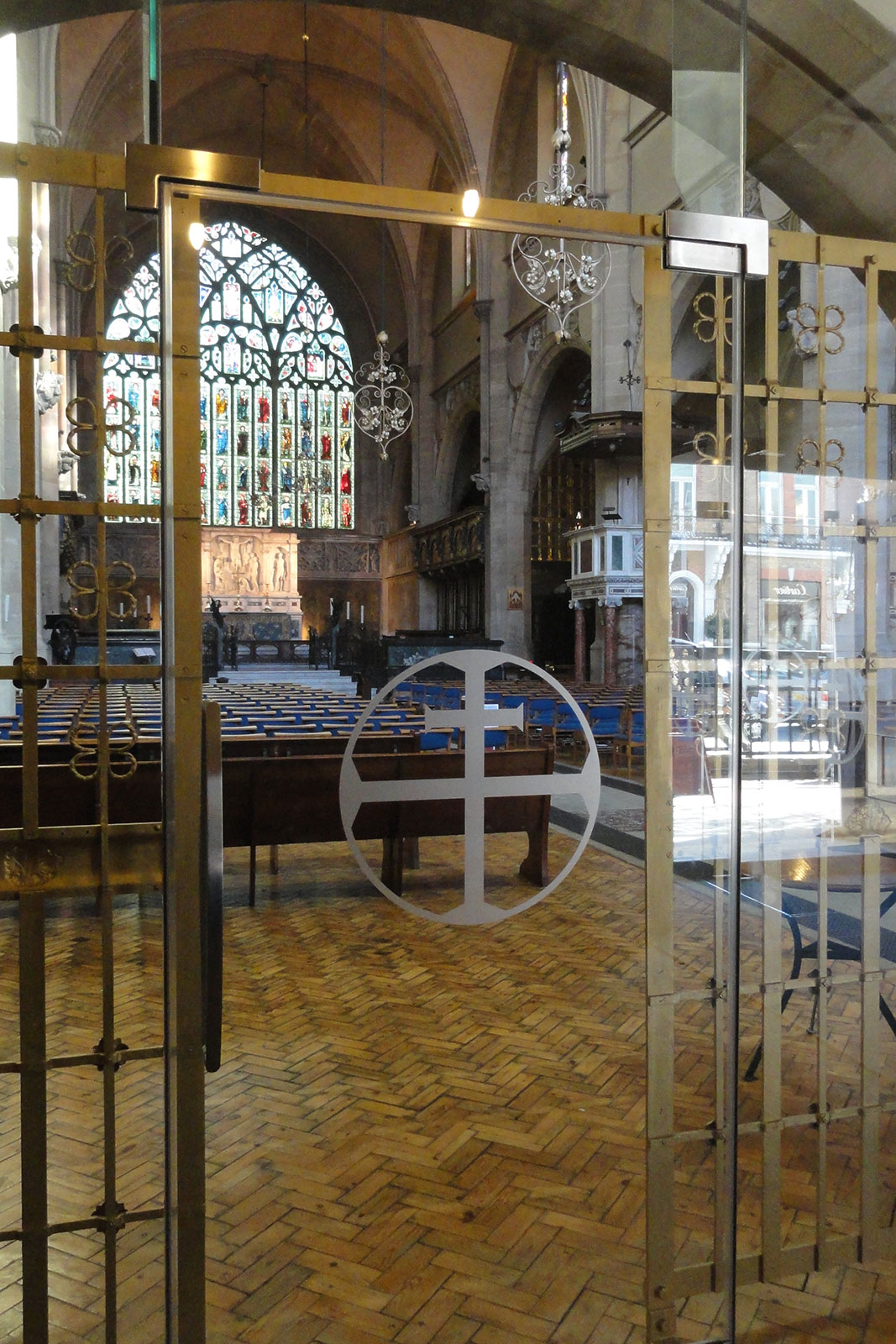
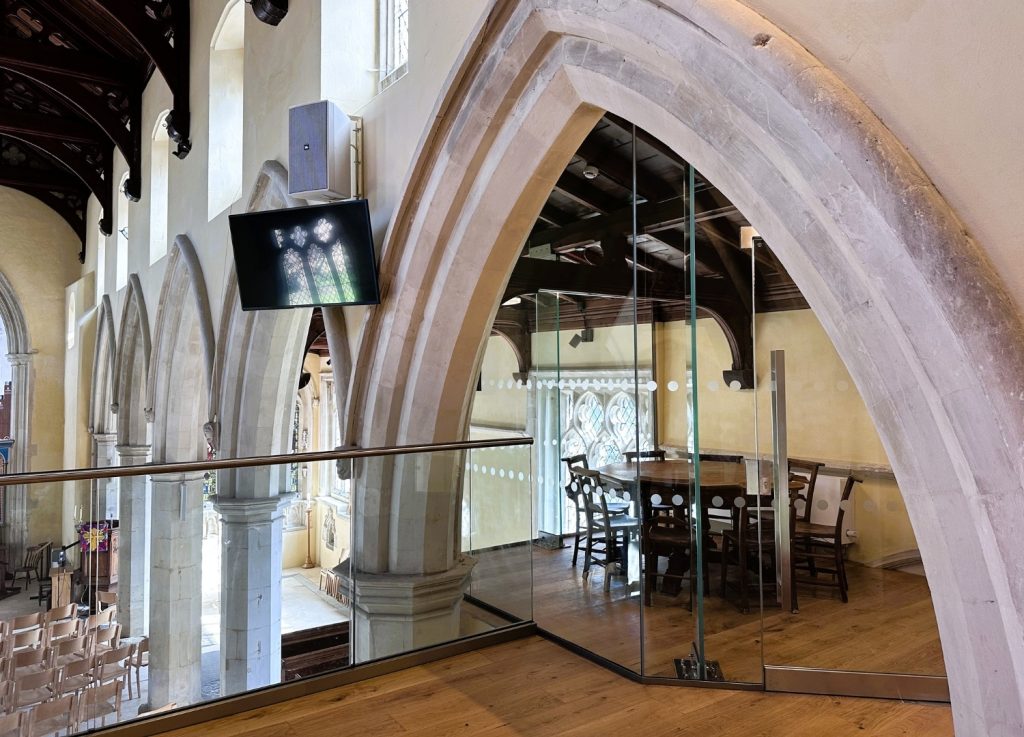
It was important that the project should reflect the Arts and Crafts heritage and that the new glass meeting rooms should provide privacy whilst at the same time allowing an unhindered view of the nave.
Technical Information
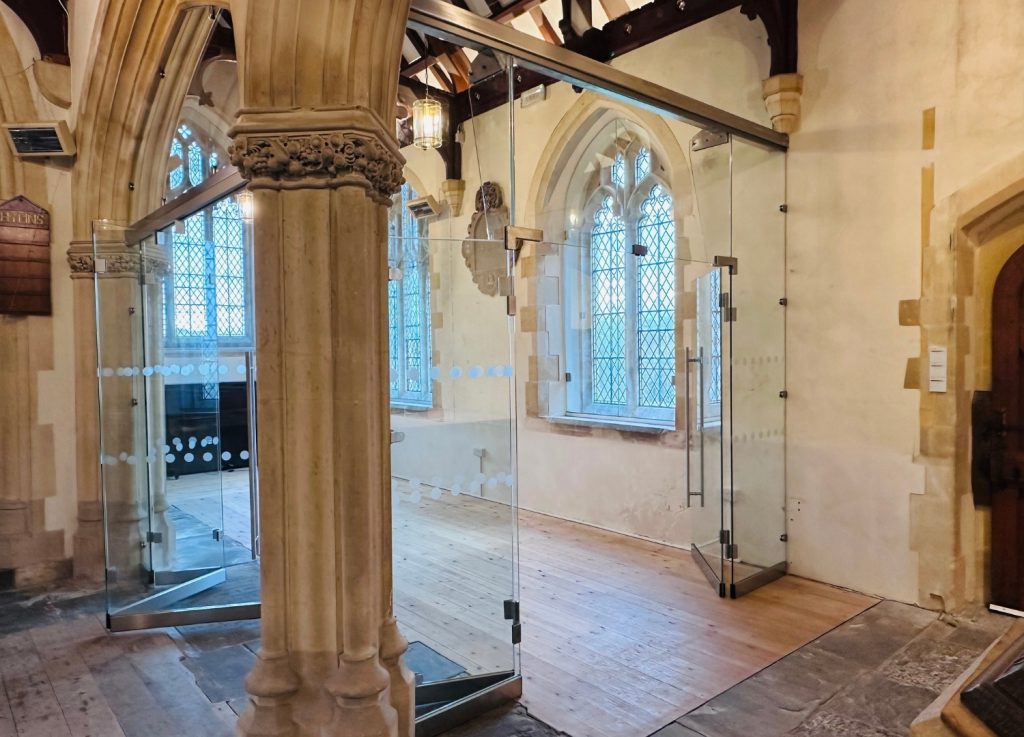
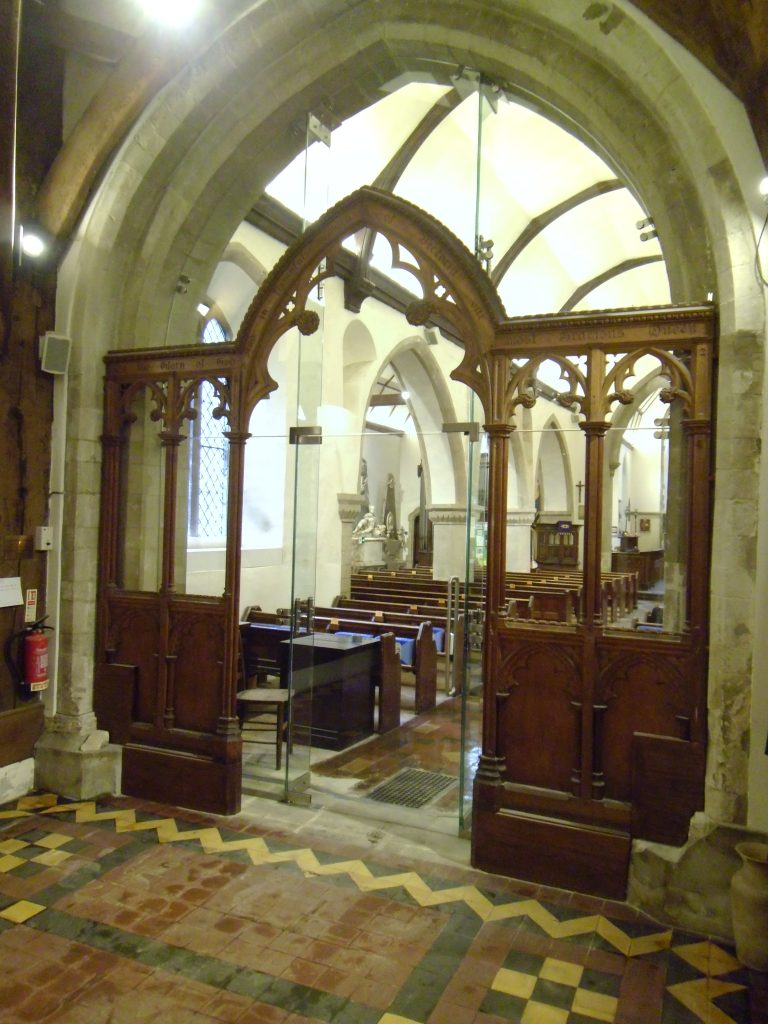
The new double glass doors are hinged from fixed side panels with a single glass transom panel above, stabilised internally with minimal glass fins. Each set of glass doors is designed to work in sync with each other to ensure that one set is closed before the other set opens and that left and right doors close together. Constructed from 12mm clear float toughened glass the frameless glass doors were supplied together with a full width arched overhead fixed glass panel, manufactured to fit perfectly into the original stonework.
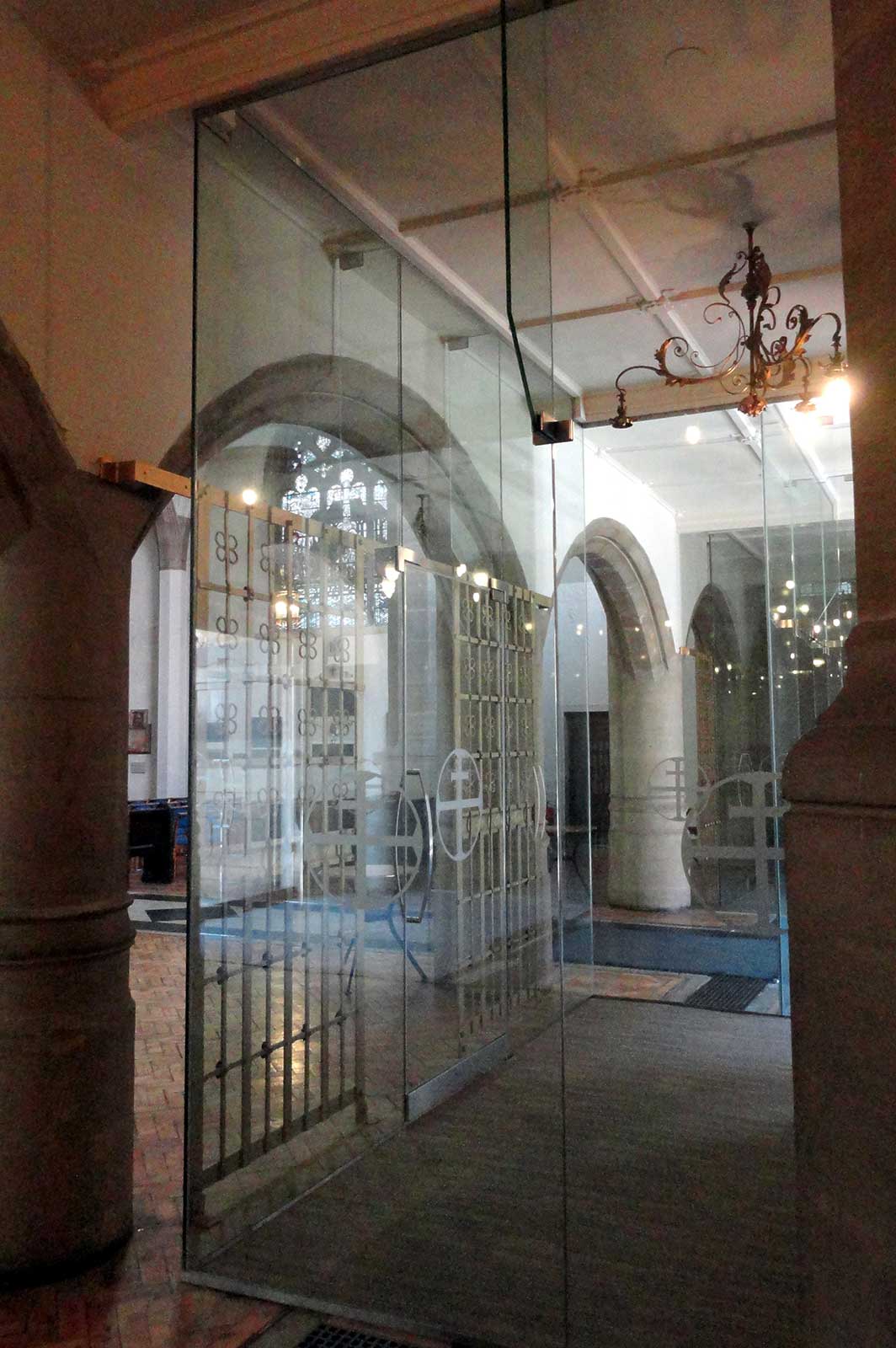
Two meeting rooms are entirely constructed from structural glass, allowing an unhindered view of the nave. The glass screens are set into the original stonework with lateral bracing provided by partial glass fins. Frameless glass pivot doors provide access to each meeting room. The space was created from 12mm acoustic glass to provide a wholly quiet and private environment.
Due to the undulating floor levels and varying ceiling surfaces within the spaces, it was not possible to establish a datum for laser measurement, so much of the glass was manufactured from template. Shapes were taken of the stone corbels using a templating comb to ensure a precise fit. Ion also successfully pioneered a complex manufacturing technique on this project: offsetting the individual laminated panes by 10mm where the glass met the stone columns at an oblique angle.
Moving an original metal screen from the rear of the church to the front of the new meeting rooms retained the style of the Arts and Crafts movement, complemented by a decorative applied glass manifestation that echoes the motif in the screen.